
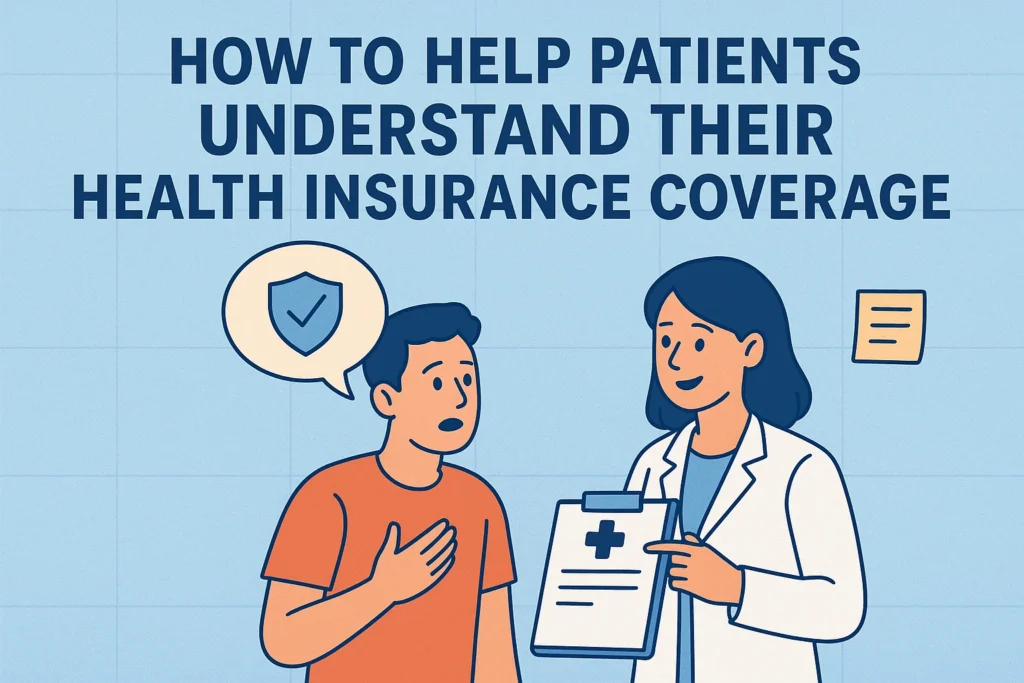
When patients visit a clinic, they often worry about money. They want to know what their health plan will pay for and what they must pay on their own. This is why it is important to explain patient health insurance coverage in a clear and kind way. When you do, they feel safe. They feel heard. And they trust you more.
Most of the patients never read their full health insurance plan. The words are long. The rules feel hidden. And the numbers confuse them.
Also, each company uses its own terms. One plan may say one thing, while another plan says the same thing with new words. This makes the patients feel unsure.
Explaining insurance coverage to patients will also help you to get the amount easily your patients owe you.
In this article, we will discuss in detail how you should guide patients about their health insurance plan.
Start With Simple Words
First, use everyday words. Skip long terms when you can.
For example, instead of saying “eligible benefits,” you can say “what your plan will cover.”
Short words help the mind relax. They make scary things feel easy.
Next, give the patient time to think. Many people need a moment to process what you say. Let them ask questions. This makes the talk feel more like a friendly chat.
Show, Don’t Just Tell
Sometimes people understand better when they see the info.
You can use:
- A small chart
- A short list
- A bright sticky note
- A very simple handout
Also, writing things down helps them remember later.
Meanwhile, showing them saves you time because they won’t call later with the same question.
Explain Basic Terms in Plain English
Here are terms that confuse patients the most. You can teach them in soft, small steps.
Premium
This is the amount patients pay each month to keep their plan active.
Deductible
This is how much they must pay on their own before the plan begins to help.
Copay
Copay is a small set fee the patients pay for each visit or service.
Coinsurance
This is the part of the bill the patient split with the plan after the deductible is met.
Out-of-Pocket
This is the most the patients will pay in a year. After they hit this number, the plan pays the rest.
When you explain each term one by one, patients feel smart and calm.
Use Real-Life Examples
People love clear examples.
For example, you can say:
“Let’s pretend your visit costs $100. Your copay is $20. So you pay $20 today, and your plan pays the rest.”
Or
“Let’s say your deductible is $500. You’ve paid $300 so far. You still need $200 before your health insurance plan starts covering your health care expenses.”
These small stories help the patient see how things work in real life. Also, it builds their trust because you are not hiding anything.
Talk About In-Network and Out-of-Network
This part is huge. About 60% of patients do not know the difference.
Therefore, tell them which doctors, labs, and centers are safe picks. This helps the patients avoid surprise bills later.
- In-network means the patient’s insurance company made a deal with the doctor, so the cost is lower.
- Out-of-network means no deal, so the cost is higher.
In addition, you can help them check their payers’ website to confirm which places are covered. Some patients will not know where to look, so a little help goes a long way.
Use Slow Steps When Talking About Medical Bills
Money is a sensitive issue. Some patients feel stressed or even scared. So keep things light.
First, explain what the visit cost.
Next, tell them what the patient’s health insurance plan paid.
Then tell them what they owe and why.
Also, it helps to show the math in one or two simple lines. When people can see the numbers, they feel more in control.
Repeat Key Points in a Nice Way
People do not always remember everything the first time. So repeat the most important parts in slow, clear lines. However, do it in a kind tone, never in a way that feels pushy. For example, you can say:
“Just a quick repeat so it stays clear…”
or
“Let me say that part again in a simple way…”
This helps remove fear.
Talk About the Patient’s Role
Tell them what they can do on their own. This makes the patients feel strong.
They can:
- Call their plan before a big visit
- Ask about covered services
- Check if a referral is needed
- Keep copies of bills
- Save plan letters and emails
- Ask questions early
Meanwhile, remind them that no question is too small. Many people stay silent because they feel shy. When you open the door, they feel welcome.
Help Them Use Their Health Insurance Plan the Right Way
Explain things like:
- How many visits the plan allows
- Which tests or scans need approval
- Which drugs the plan covers
- How to avoid extra fees
Also, teach them how to read the Explanation of Benefits (EOB). This paper scares almost everyone.
You can show them:
- The cost of the service
- What the plan paid
- What they must pay
- Why the amounts look the way they do
This small lesson gives them real power.
When you talk about patient health insurance coverage, keep the mood calm and friendly. People learn better when they feel safe. You can even keep a small cheat sheet at the front desk that explains patient health insurance coverage in five or six simple points. This helps both the staff and the patients.
Help Them Ask Better Questions
Teach the patients helpful lines like:
- “Is this service covered?”
- “Is this in-network?”
- “Will I need a referral?”
- “What will my part cost?”
Next, remind them to take notes.
Finally, tell them they can always follow up if something is still unclear.
Give The Patients Confidence, Not Fear
Your tone matters just as much as your words.
Speak slowly. Smile. Keep the room calm. Listen without rushing. People can sense care. And when they feel cared for, they listen more closely.
Also, you do not need fancy words or a long speech. Simple talk often works best.
Create a Small Help System in Your Clinic
A few small tools can make a big difference:
- A small FAQ page
- A simple wall poster
- A friendly script for the front desk
- A short training for staff
- A printed card with key terms
In addition, you can show patients how to log in to their plan portals. Some people have never used them before. Teaching them once can help them for years.
Why Clear Talks Save Time Later
When patients understand their health insurance plan, they make fewer mistakes.
For example:
- They do not go to out-of-network clinics by accident
- They avoid tests that are not covered
- They plan ahead for costs
- They bring needed referrals
- They call with fewer repeat questions
Therefore, a few extra minutes at the start can save hours later.
Conclusion
Helping patients understand their insurance health plan is a kind act. It brings peace to their mind. And it helps them make smart choices about their care.
When you explain patient health insurance coverage in short, clear steps, you remove fear and build trust.